
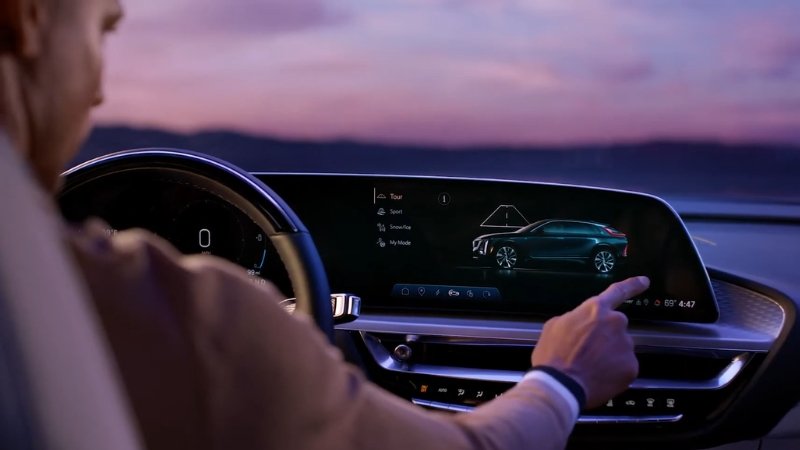
As electric vehicles (EVs) continue to dominate the luxury market, the Cadillac Lyriq stands out with its stunning design, advanced Ultium battery platform, and whisper-quiet ride. However, making the switch from a traditional internal combustion engine to a premium electric SUV often comes with a learning curve. One of the most common questions new EV owners ask revolves around maximizing their daily efficiency. Specifically, do the driving modes in cadillac lyriq offer different ranges or battery usages?
The short answer is yes, but not in the way you might think. Your selected driving mode does not magically increase or decrease the physical capacity of your battery pack. Instead, these modes fundamentally alter how the vehicle’s software manages power delivery, torque, and regenerative braking. By changing the throttle response and how the electric motors draw power, your choice of driving mode directly impacts your real-world efficiency—which, in turn, dictates your total range.
In this comprehensive guide, we will break down exactly how each of the Cadillac Lyriq’s drive modes operates, the science behind EV energy consumption, and the daily habits you can adopt to squeeze every possible mile out of your battery. Whether you are commuting through city traffic or taking a long interstate road trip, understanding these systems is key to mastering your luxury EV experience.
Understanding the Cadillac Lyriq Powertrain and Battery
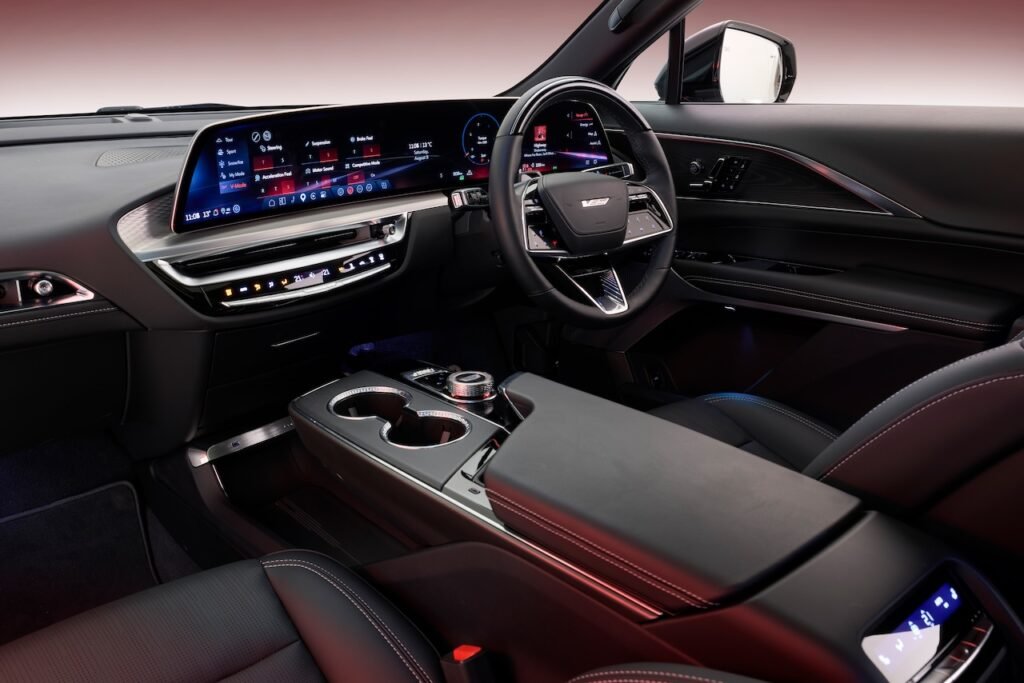
Before analyzing how software settings change your efficiency, it is crucial to understand the hardware powering your vehicle. The Cadillac Lyriq is built on General Motors’ highly touted Ultium platform, featuring a robust 102 kWh battery pack.
The Lyriq is available in two primary configurations:
- Rear-Wheel Drive (RWD): Features a single electric motor mounted on the rear axle, producing 340 horsepower and 325 lb-ft of torque. Because it only powers one motor, this setup boasts the highest EPA-estimated range, typically around 314 miles on a full charge.
- All-Wheel Drive (AWD): Adds a second motor to the front axle, boosting total output to an impressive 500 horsepower and 450 lb-ft of torque. The extra weight and the energy required to power a second motor drop the EPA-estimated range slightly, usually landing around 307 miles.
Regardless of the configuration you choose, the 102 kWh battery stores a finite amount of electrical energy. The distance you can travel on that energy is measured in miles per kilowatt-hour (mi/kWh). Think of this metric as the EV equivalent of miles per gallon (MPG). Your driving mode plays a significant role in determining whether you achieve a highly efficient 3.0 mi/kWh or a power-hungry 2.1 mi/kWh.
Learn More: InsightTrendz Blog: The Complete Guide to What It Offers and Why It’s Worth Your Time
Do the Driving Modes in Cadillac Lyriq Offer Different Ranges or Battery Usages?
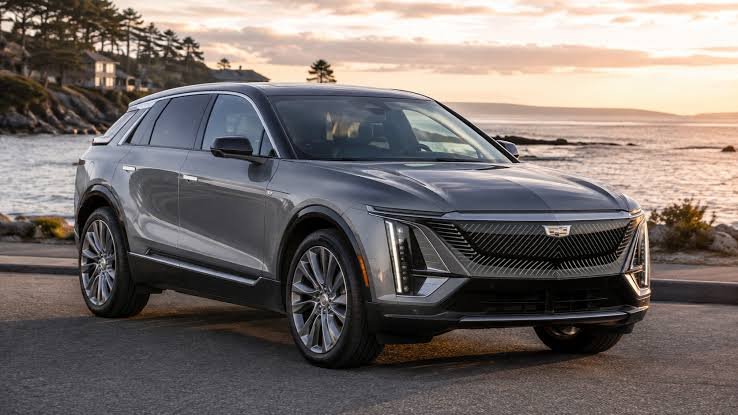
To answer the core question: do the driving modes in cadillac lyriq offer different ranges or battery usages? Yes, they absolutely do influence battery usage, which inherently changes your estimated range.
When you switch between driving modes, the car’s computer adjusts the throttle mapping. In simpler terms, it changes how much electrical current is sent from the battery to the motors for a given amount of pressure on the accelerator pedal.
If you are in a mode that commands a massive surge of instant torque (like Sport mode), the battery discharges faster. Rapid discharging generates more heat and reduces the overall efficiency of the battery cells. Conversely, if you are in a mode that smooths out power delivery (like Tour or Snow/Ice mode), the battery discharges at a more measured, steady rate. This steady rate minimizes energy waste and maximizes your overall range.
Therefore, while the drive modes do not artificially cap your battery’s physical capacity, they heavily dictate your driving behavior and the vehicle’s energy output. Driving 100 miles in Sport mode will objectively use a higher percentage of your battery than driving those same 100 miles in Tour mode, assuming identical driving conditions.
A Deep Dive into Cadillac Lyriq Drive Modes
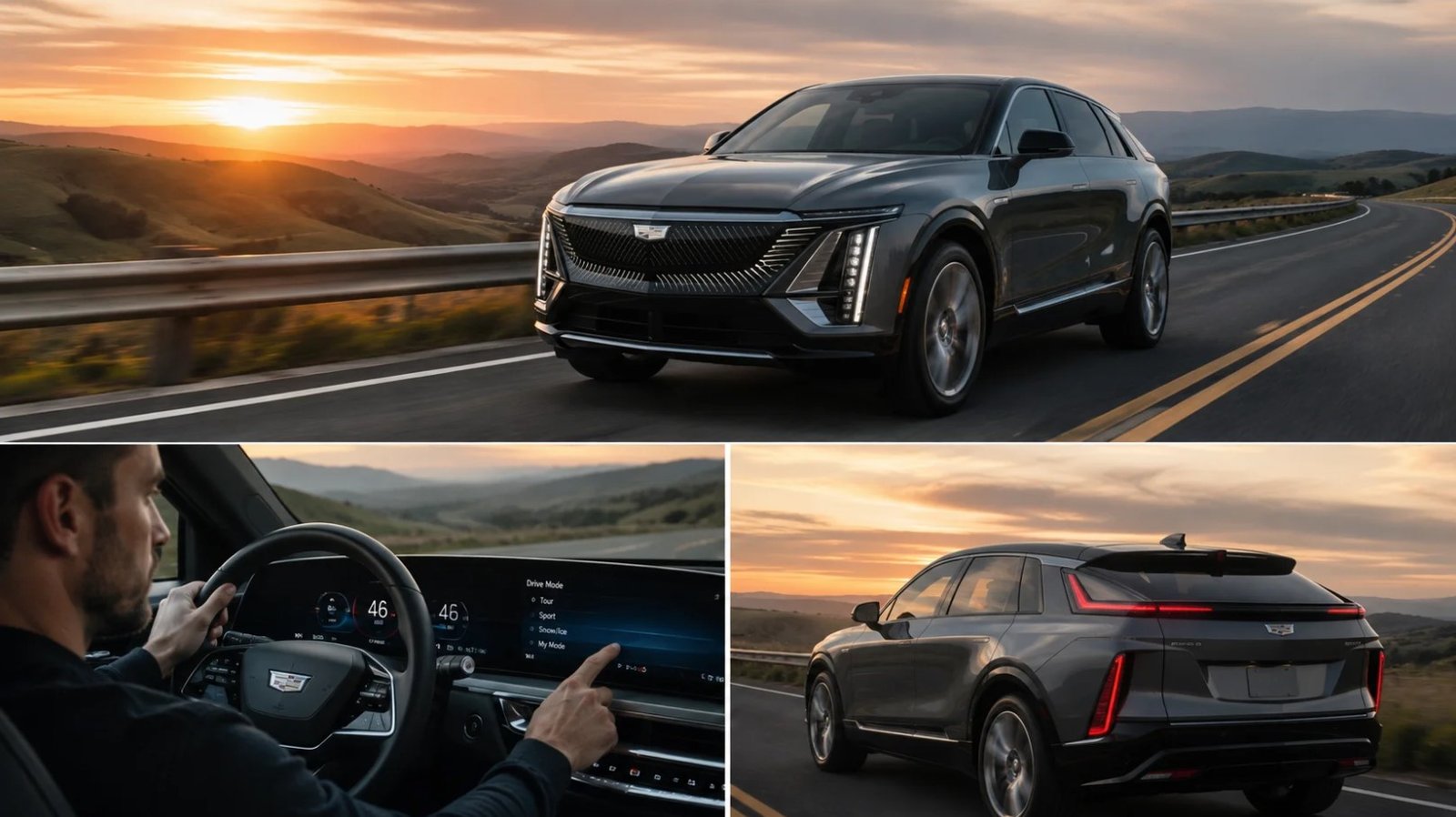
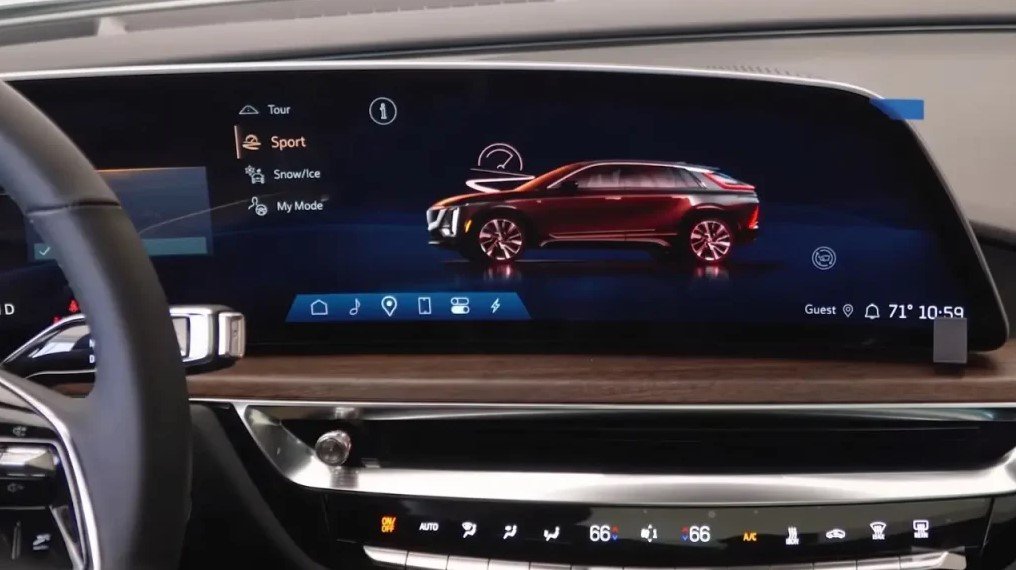
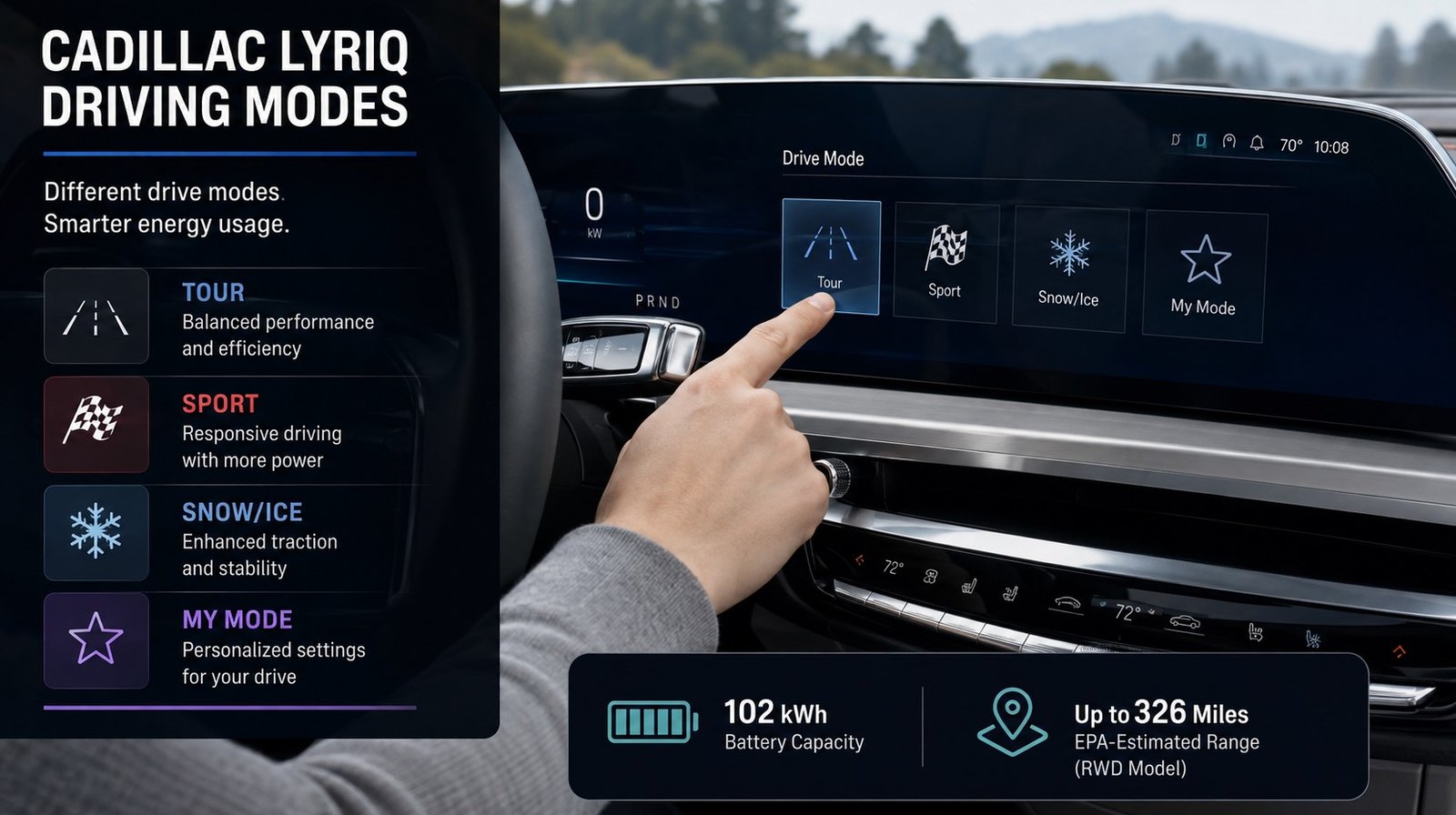
The Cadillac Lyriq offers four distinct driving modes, accessible via the infotainment screen or the center console controls. Let’s explore how each mode affects the vehicle’s dynamics and its subsequent impact on battery consumption.
Tour Mode: The Baseline for Efficiency
Tour Mode is the default setting every time you turn on your Cadillac Lyriq. It is engineered to provide the optimal balance between luxury comfort, smooth acceleration, and maximum range.
When driving in Tour mode, the throttle pedal is mapped to deliver power linearly. This means you won’t experience jarring surges of speed unless you deliberately press the pedal to the floor. By keeping the power delivery smooth, Tour mode prevents unnecessary spikes in electrical current draw. The steering is light and effortless, and the regenerative braking defaults to a natural, coast-friendly feel (unless you have One-Pedal Driving manually engaged). If you want to match the EPA-estimated range on your window sticker, Tour mode is your best tool.
Sport Mode: Performance at a Cost
When you want to feel the full thrust of the Lyriq’s electric motors, Sport Mode is the answer. Engaging this mode tightens the steering for better road feedback and drastically alters the throttle mapping.
In Sport mode, the accelerator becomes hyper-sensitive. A slight press of your foot commands a massive surge of electrons from the Ultium battery pack to the motors. While this results in exhilarating acceleration and immediate passing power on the highway, it is highly detrimental to your overall range. Rapid acceleration draws high amperage from the battery, which not only consumes energy faster but also increases thermal output, forcing the battery cooling systems to work harder. If you leave your vehicle in Sport mode permanently, expect to see a noticeable reduction in your mi/kWh efficiency.
Snow/Ice Mode: Maximizing Traction
Electric motors produce maximum torque at zero RPM. While this is great for performance, it can be disastrous on slippery surfaces like snow, ice, or heavy rain, leading to wheel spin and loss of control.
Snow/Ice Mode specifically addresses this by dulling the throttle response. When you press the pedal, the software intentionally delivers power slowly and gently to prevent the tires from breaking traction. Interestingly, this safety feature inadvertently makes Snow/Ice mode highly efficient. Because it is nearly impossible to accelerate aggressively in this mode, your battery experiences a very slow, steady discharge rate. While it is not recommended for dry summer driving due to its sluggish feel, it uses battery power very conservatively.
My Mode: The Custom Experience
For drivers who want the best of all worlds, My Mode allows you to tailor individual vehicle characteristics to your liking. You can mix and match settings from the other modes.
For example, you might prefer the heavy, precise steering of Sport mode, but want the efficient, smooth throttle mapping of Tour mode. By configuring My Mode, you can maintain excellent steering feedback without sacrificing your battery range to aggressive acceleration profiles. Taking the time to set up My Mode can result in a personalized driving experience that perfectly balances your desire for engagement with the need for efficiency.
How Drive Modes Influence Real-World Range

Understanding the technical relationship between your driving mode and your battery requires looking at a few specific mechanical operations.
Throttle Mapping and Current Draw
As mentioned, throttle mapping is the primary variable across different modes. Your EV battery pack prefers a steady, consistent draw of power. When you drive aggressively in Sport mode, you demand high spikes of energy. These spikes create internal resistance within the battery cells, which generates heat. Energy lost as heat is energy that is not being used to turn the wheels, thus lowering your range.
Motor Engagement in AWD Models
In the AWD Cadillac Lyriq, the vehicle uses specialized software to determine when to engage the front motor. In Tour mode, the car will primarily use the rear motor for cruising, only waking up the front motor when heavy acceleration or traction control is needed. In Sport mode, the vehicle is more eager to keep both motors active to ensure instant all-wheel-drive performance, which inherently uses more electricity.
Coasting vs. Regenerative Braking
Your driving mode can also influence how the vehicle handles deceleration. While the Lyriq features a dedicated pressure-sensitive paddle on the steering wheel for on-demand regenerative braking, the drive modes interact with the baseline deceleration. Smoother modes allow the car to maintain momentum better, whereas aggressive modes may apply sharper regenerative braking upon lift-off, changing the rhythm of your drive and how energy is recaptured.
Comparison Table: Drive Modes vs. Efficiency Impact
To help you visualize how each mode impacts your daily driving, refer to this quick comparison table:
| Driving Mode | Throttle Response | Steering Feel | Impact on Battery Usage | Impact on Total Range |
| Tour | Smooth, linear | Light, comfortable | Normal / Baseline | Optimal (Closest to EPA) |
| Sport | Aggressive, sharp | Heavy, precise | High current draw | Reduced (Lower efficiency) |
| Snow/Ice | Dulled, gradual | Light | Low, steady draw | Neutral to High |
| My Mode | Customizable | Customizable | Variable based on setup | Variable based on setup |
Pros and Cons of Using Different Modes for Range Management
If your goal is strictly range management, it helps to weigh the benefits and drawbacks of how you utilize the Lyriq’s software.
Pros:
- Tour mode ensures predictable consumption: Sticking to Tour mode allows the vehicle’s software to accurately predict your remaining range based on historical data.
- Customization saves energy: Using My Mode allows you to enjoy sporty steering without the energy penalty of a sensitive throttle.
- Snow mode enforces efficient habits: The restricted torque in Snow/Ice mode forces you to drive gently, which inadvertently saves battery on slippery winter roads.
Cons:
- Sport mode range anxiety: The thrilling acceleration of Sport mode will visibly drain your battery faster, which can induce range anxiety on longer trips.
- False sense of security: Changing modes does not suddenly add energy to a depleted battery; it only slows the rate of future consumption.
- Inconsistent range estimates: Frequently switching between Tour and Sport modes can confuse the vehicle’s range estimator (the “guess-o-meter”), leading to fluctuating range predictions on your dashboard.
Beyond Drive Modes: What Really Drains Your Lyriq’s Battery?
While asking do the driving modes in cadillac lyriq offer different ranges or battery usages is a great starting point, driving modes are just one piece of the puzzle. Real-world EV owners often discover that external factors play an even larger role in battery drain than the drive mode selected.
High-Speed Highway Driving
Unlike gas cars, which are most efficient on the highway, EVs thrive in city traffic. Electric motors spin significantly faster at high speeds, and aerodynamic drag increases exponentially as you approach 70 or 80 mph. Real-world data from Lyriq owners shows that driving at 75+ mph can drop efficiency to 2.1 mi/kWh, severely undercutting the EPA estimate regardless of whether you are in Tour or Sport mode.
Extreme Temperatures
Lithium-ion batteries are heavily impacted by climate. In freezing weather, the chemical reactions inside the battery slow down, temporarily reducing capacity. Furthermore, using the electric cabin heater draws a massive amount of high-voltage power directly from the battery pack. Conversely, blasting the air conditioning during a 100-degree summer day also eats into your range. Extreme cold can easily slice 20% to 30% off your total range before you even put the car in gear.
Elevation and Topography
Driving uphill requires significantly more energy to move the Lyriq’s substantial three-ton curb weight against gravity. While you will recapture a portion of that energy via regenerative braking on the way down, you never get back 100% of what you spent going up. Mountainous commutes will yield lower range estimates than flat coastal driving.
Wheel Size Options
The Cadillac Lyriq is offered with large, visually stunning 20-inch or 22-inch wheels. Larger wheels are heavier and have a higher rolling resistance. Upgrading to the 22-inch wheels will naturally reduce your total range compared to the standard 20-inch wheels, simply due to rotational mass and friction.
Actionable Tips to Maximize the Cadillac Lyriq’s Range
If you want to beat the EPA estimates and get the most out of your luxury EV, combine the right driving mode with these proven efficiency tactics.
1. Master One-Pedal Driving:
The Lyriq features robust One-Pedal Driving capabilities. When activated, lifting your foot off the accelerator automatically applies regenerative braking, capturing kinetic energy and feeding it back into the battery. Driving smoothly with this feature can significantly boost city range.
2. Utilize the Regen Paddle:
Cadillac includes a pressure-sensitive paddle on the back of the steering wheel. Pulling this paddle manually applies regenerative braking. It is a fantastic tool for scrubbing off speed on highway off-ramps while recovering free energy.
3. Precondition Your Cabin:
While your Lyriq is still plugged in at home, use the Cadillac app to turn on the climate control. Heating or cooling the cabin using grid power means your battery doesn’t have to do the heavy lifting once you unplug and start driving.
4. Stick to Tour Mode for Daily Commutes:
Reserve Sport mode for winding back roads or merging onto fast highways. Keep the car in Tour mode for your mundane daily errands to preserve battery life.
5. Manage Your Highway Speed:
The sweet spot for EV efficiency is between 60 and 65 mph. Every mile per hour you drive over 70 mph results in a drastic increase in aerodynamic drag and a sharp drop in your total range. Set your Super Cruise slightly lower to arrive with a higher state of charge.
Click Here: Zavalio.com Review 2026: Features, Content, Safety & Legitimacy
Frequently Asked Questions (FAQs)
1. Does the Cadillac Lyriq have an Eco mode?
No, the Cadillac Lyriq does not have a dedicated “Eco” mode. However, the standard Tour mode functions as the vehicle’s most balanced and efficient baseline setting.
2. Does driving in Sport mode permanently damage the battery?
No, using Sport mode will not damage the battery. The Ultium platform features advanced thermal management to protect the cells. However, frequent aggressive acceleration will drain the battery faster and require more frequent charging cycles.
3. Why does my estimated range drop when I turn on the heat?
The Lyriq’s climate control system uses an electric heating element that draws power straight from the high-voltage battery. When you turn it on, the computer instantly recalculates your range to account for this massive energy draw.
4. Will My Mode allow me to get more range than Tour mode?
Not necessarily. My Mode allows you to adjust steering and braking feel, but you cannot configure a throttle map that is “slower” or more efficient than what is already provided by Tour or Snow/Ice mode.
5. How accurate is the range estimator in the Lyriq?
The range estimator (often called the guess-o-meter) bases its numbers on your recent driving efficiency, temperature, and climate control usage. If you just finished driving aggressively in Sport mode, the estimate will display a lower number for your next trip.
6. Does One-Pedal Driving work in all drive modes?
Yes, you can enable One-Pedal Driving regardless of whether you are in Tour, Sport, or My Mode. It is managed via a separate setting on the infotainment screen.
7. Does the AWD Lyriq use more battery than the RWD model?
Yes. The AWD model has a second motor on the front axle. The added weight and the energy required to power two motors slightly reduce the overall efficiency compared to the single-motor RWD variant.
8. Can I change driving modes while the car is moving?
Yes, you can seamlessly toggle between Tour, Sport, and My Mode while driving. The vehicle’s computer will instantly adjust the throttle mapping and steering weight on the fly.
9. Why is my winter range so much lower than my summer range?
Cold temperatures increase the internal resistance of lithium-ion cells, and heating a cold cabin requires a tremendous amount of electrical energy. It is entirely normal for an EV to lose 20% to 30% of its range in freezing weather.
10. Do larger wheels affect the Lyriq’s battery range?
Yes. Opting for the 22-inch wheels increases rolling resistance and rotational weight, which forces the electric motors to work slightly harder, thereby reducing your maximum range compared to the standard 20-inch wheels.
Conclusion
Transitioning to an electric vehicle requires a slight shift in how you think about driving, and understanding your vehicle’s software is a massive part of that transition. So, do the driving modes in cadillac lyriq offer different ranges or battery usages? Yes—by altering throttle mapping, steering resistance, and torque delivery, the drive modes directly impact how much energy your motors pull from the Ultium battery pack.
While Tour mode remains the undisputed champion for daily efficiency and range preservation, the Lyriq offers the flexibility to have fun when you want it. By strategically utilizing Sport mode only when necessary, leaning into One-Pedal Driving, and managing your highway speeds, you can confidently conquer long trips without range anxiety. The Cadillac Lyriq is a masterpiece of modern EV engineering, and with the right driving habits, you can command both performance and exceptional efficiency on the open road.