
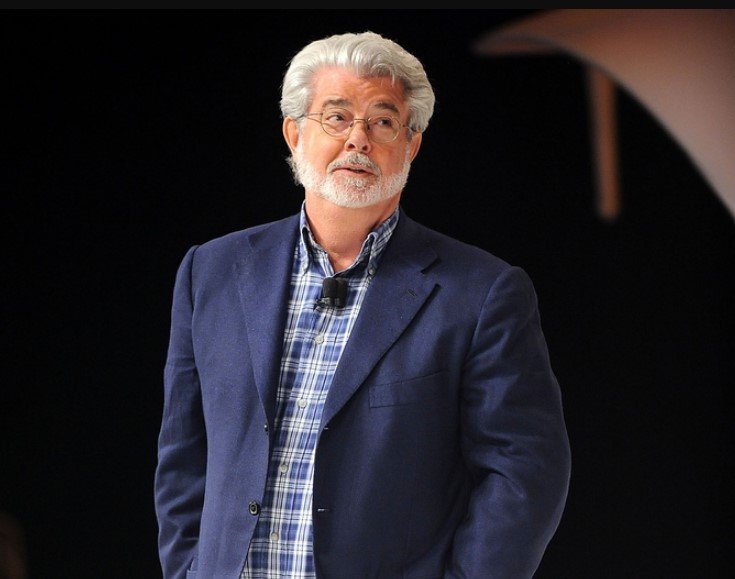
Few names in modern entertainment carry the cultural weight of George Lucas. As the writer-director behind Star Wars and a driving force behind Indiana Jones, Lucas didn’t just make movies — he built an industrial ecosystem around filmmaking, from visual effects to sound design to merchandising. Decades after Star Wars first hit theaters in 1977, discussions about George Lucas net worth remain a recurring topic among entertainment journalists and financial publications, largely because of one landmark deal: the 2012 sale of Lucasfilm to The Walt Disney Company. This article walks through Lucas’s biography, career timeline, business ventures, and estimated net worth, using only publicly available reporting, and flags clearly where figures vary between sources.
Quick Facts
| Category | Details |
| Full Name | George Walton Lucas Jr. |
| Date of Birth | May 14, 1944 |
| Age | 82 (as of 2026) |
| Birthplace | Modesto, California, USA |
| Nationality | American |
| Occupation | Filmmaker, screenwriter, producer, entrepreneur |
| Known For | Star Wars, American Graffiti, Indiana Jones, Lucasfilm, Industrial Light & Magic |
| Education | Modesto Junior College; University of Southern California (USC School of Cinematic Arts) |
| Spouse | Mellody Hobson (m. 2013); previously married to Marcia Lucas (1969–1983) |
| Children | Four (one biological/surrogate, three adopted) |
| Estimated Net Worth | Reported between roughly $5 billion and $9 billion, depending on the source (estimates vary — see below) |
| Primary Wealth Source | Lucasfilm/Star Wars franchise, sale to Disney, licensing, investments |
| Residence | San Anselmo, California |
Biography
George Walton Lucas Jr. was born on May 14, 1944, in Modesto, California, to George Walton Lucas Sr., who ran a local stationery store, and Dorothy Ellinore Lucas. Lucas grew up in a modest, middle-class household and has often described his hometown of Modesto — with its car culture, drive-ins, and small-town rhythms — as a lasting influence on his later work, most visibly in his 1973 film American Graffiti.
Learn More: Celebrity Net Worth
Age
As of 2026, George Lucas is 82 years old, having been born in May 1944.
Height
Lucas’s height is not documented in any official biography or verified public record. Entertainment and fan sites commonly estimate his height at around 5 feet 6 inches to 5 feet 7 inches (roughly 168–170 cm), but because there is no confirmed, sourced figure from Lucas himself or an authoritative record, this should be treated as an approximate, unverified estimate rather than a confirmed fact.
Early Life
Lucas was an unremarkable student for much of his youth and was, by his own accounts, far more interested in cars and motor racing than academics. He raced modified cars on local circuits as a teenager. In 1962, shortly before his high school graduation, Lucas was seriously injured in a car accident when his vehicle was struck and flipped. The crash is widely cited in biographical accounts as a turning point that redirected him away from racing and toward more reflective pursuits, including photography and filmmaking.
Education
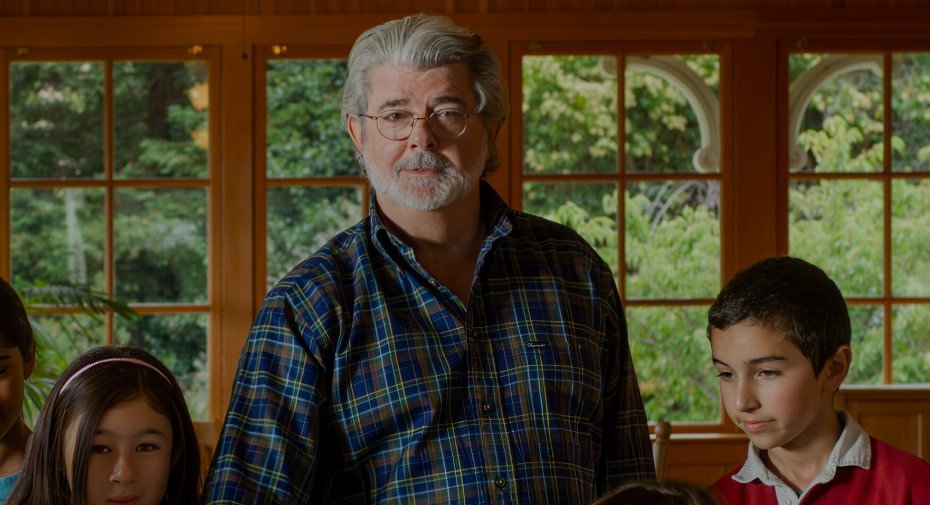
After recovering from his accident, Lucas enrolled at Modesto Junior College, where he studied subjects including anthropology, sociology, and literature, and developed an early interest in visual storytelling through photography and cinematography courses. He later transferred to the University of Southern California’s School of Cinematic Arts (then known as the USC School of Cinema), one of the country’s leading film schools. There, Lucas made several award-winning student short films, including Electronic Labyrinth: THX 1138 4EB, which won a top prize at the National Student Film Festival and later became the basis for his first feature film. It was also during his time around USC and Los Angeles’s film community that Lucas built relationships with future collaborators, including Francis Ford Coppola, who became an important early mentor.
Career Timeline
- 1967–1971: Lucas graduates from USC, works as an assistant to Francis Ford Coppola, and develops his student short into a feature-length screenplay.
- 1971: Founds Lucasfilm Ltd. and releases his directorial feature debut, THX 1138, a dystopian science-fiction film that performed modestly at the box office but built his reputation as a visual stylist.
- 1973: Directs American Graffiti, a coming-of-age comedy-drama that becomes a major commercial and critical success and earns Lucas his first Academy Award nominations.
- 1975: Founds Industrial Light & Magic (ILM), a visual effects company created to produce the effects for his upcoming space opera.
- 1977: Releases Star Wars (later retitled Star Wars: Episode IV – A New Hope), which becomes a cultural and commercial phenomenon and reshapes the business model of blockbuster filmmaking.
- 1980–1983: Serves as executive producer and story writer on The Empire Strikes Back (1980) and Return of the Jedi (1983), completing the original trilogy.
- 1981–1989: Co-creates the Indiana Jones franchise with Steven Spielberg, producing Raiders of the Lost Ark (1981), Temple of Doom (1984), and The Last Crusade (1989).
- 1980s: Founds Skywalker Sound and LucasArts, expanding Lucasfilm into audio post-production and video games.
- 1999–2005: Returns to the director’s chair for the Star Wars prequel trilogy — The Phantom Menace (1999), Attack of the Clones (2002), and Revenge of the Sith (2005) — which he largely self-financed.
- 2012: Announces the sale of Lucasfilm to The Walt Disney Company in a deal combining cash and Disney stock, and steps back from active filmmaking.
- 2010s–present: Focuses primarily on philanthropy and the development of the Lucas Museum of Narrative Art, which is scheduled to open to the public in Los Angeles’s Exposition Park on September 22, 2026.
Major Career Milestones
- Directing and writing Star Wars (1977), one of the highest-grossing and most influential films in cinema history.
- Building Industrial Light & Magic into the industry’s leading visual effects house, a company that has worked on films far beyond the Lucasfilm catalog.
- Co-creating the Indiana Jones franchise alongside Steven Spielberg.
- Retaining ownership of licensing and merchandising rights to Star Wars early in his career — a decision widely credited by industry analysts as one of the most consequential business moves in Hollywood history.
- Selling Lucasfilm to Disney in 2012 for a reported $4.05 billion in cash and stock.
- Founding and funding the Lucas Museum of Narrative Art, a major cultural institution opening in 2026.
Businesses and Investments
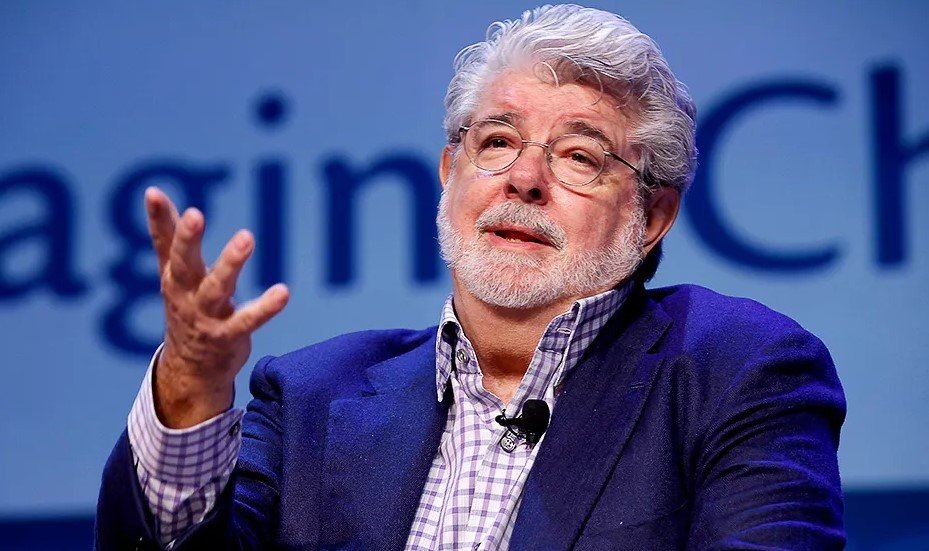
Lucasfilm Ltd., founded in 1971, was the central hub of Lucas’s business empire and eventually encompassed several subsidiaries:
- Industrial Light & Magic (ILM): A visual effects powerhouse that has contributed to hundreds of films across the industry, not just Lucas’s own productions.
- Skywalker Sound: A sound design and post-production facility based at Skywalker Ranch in Marin County, California.
- LucasArts: A video game development and publishing division, known for titles based on both Star Wars and original intellectual property, before being shut down by Disney following the 2012 acquisition.
- Skywalker Ranch: A private production and research facility that Lucas developed as a filmmaking campus outside the traditional studio system.
Since selling Lucasfilm, Lucas’s public business activity has shifted heavily toward philanthropy and museum development rather than new commercial ventures. Beyond entertainment assets, detailed information about Lucas’s personal stock portfolio, real estate holdings, or other private investments is not comprehensively disclosed in public filings, so this article does not speculate on line items that have not been publicly reported.
Main Sources of Income
According to public reporting, Lucas’s wealth has historically come from several sources:
- Star Wars franchise ownership and licensing — box office proceeds, merchandising royalties, and licensing income accumulated over decades, prior to the Disney sale.
- The 2012 Lucasfilm–Disney transaction — the largest single event in his financial history, reportedly worth around $4.05 billion in cash and Disney shares.
- Appreciation of Disney stock received as part of that sale.
- Industrial Light & Magic and other Lucasfilm subsidiaries, which generated revenue from third-party film and effects work.
- Investment income and philanthropic-adjacent institutional assets, including funds managed through the George Lucas Family Foundation.
Estimated Net Worth
Public estimates of George Lucas’s net worth vary noticeably depending on the source and the date of publication, which is common for billionaires whose wealth is tied to a mix of cash, stock holdings, and illiquid assets. Recent figures reported in 2026 have placed his fortune anywhere from roughly $5.1 billion to $9 billion, depending on the outlet and its valuation methodology. Forbes, which has tracked Lucas on its billionaires list since the 1990s, has published figures in the $5 billion range in its 2026 coverage, while other financial and entertainment publications, including Celebrity Net Worth, have cited estimates closer to $9 billion.
This spread illustrates an important point: net worth estimates for ultra-wealthy individuals are not official disclosures — they are third-party approximations built from known transactions (like the Disney sale), estimated asset values, and public stock movements, minus estimated philanthropic giving. Because Lucas does not publicly disclose a verified net worth figure, and because he has committed significant assets to charitable and museum causes, readers should treat any single number as an estimate rather than a confirmed fact, and expect these figures to be revised over time as his asset base, giving, and market conditions change.
Assets
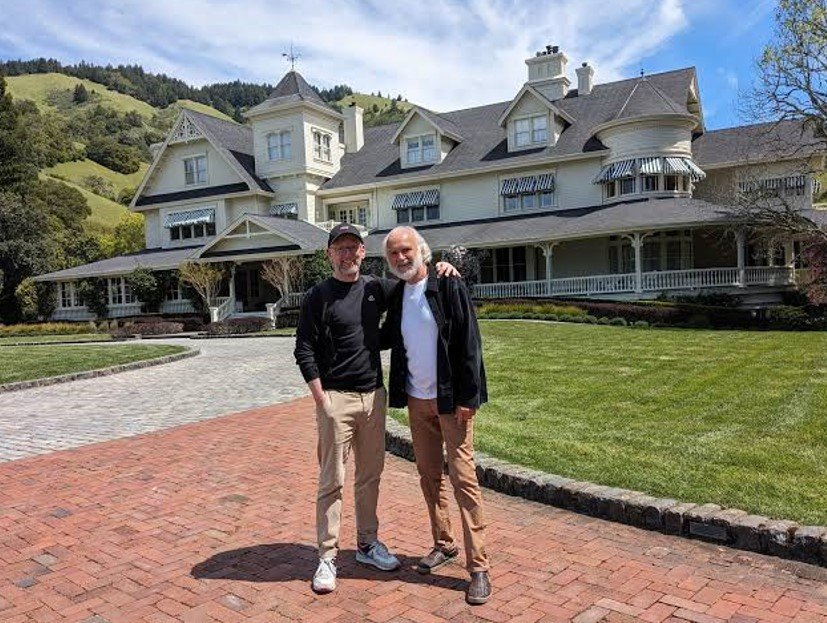
Public reporting on Lucas’s tangible assets is more limited than reporting on his overall net worth, but the following are commonly cited in credible sources:
- Skywalker Ranch, a large private estate and production facility in Marin County, California, which Lucas developed over several decades.
- A primary residence in San Anselmo, California, cited by Forbes as his current listed residence.
- Historically, Lucas has been reported to hold real estate in the San Francisco Bay Area tied to his filmmaking operations, though comprehensive, itemized public records of his full property portfolio are not available.
- A significant art collection, much of which now forms part of the permanent holdings of the Lucas Museum of Narrative Art rather than remaining a private asset.
Because Lucas is not known for a highly publicized car collection, private jet fleet, or luxury lifestyle brand presence in the way some other billionaires are, there is limited additional public documentation of personal luxury assets beyond real estate and art.
Brand Endorsements
George Lucas has not been publicly associated with traditional celebrity brand endorsement deals of the kind seen with athletes or pop stars. His commercial influence has instead worked through licensing — allowing Star Wars and other Lucasfilm properties to be used across toys, apparel, video games, and consumer products — rather than through Lucas personally endorsing third-party products or appearing in advertising campaigns.
Social Media Presence
Unlike many contemporary public figures, George Lucas does not maintain a widely recognized, verified personal social media presence on platforms such as Instagram, X (formerly Twitter), or Facebook. Public-facing communication related to his current projects, including the Lucas Museum of Narrative Art, is typically issued through official press channels and the museum’s own institutional accounts rather than a personal profile belonging to Lucas himself.
Read More: Cardi B Net Worth
Awards and Achievements
- Nominated for four competitive Academy Awards across his directing, writing, and producing credits.
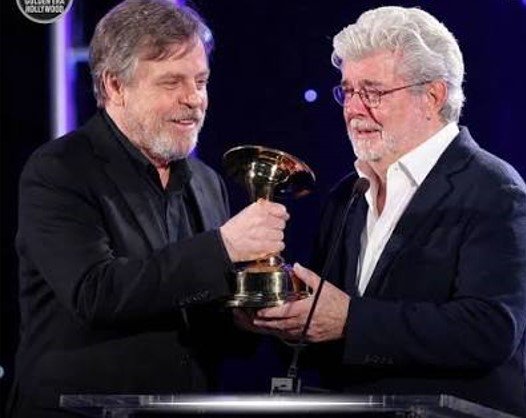
- Recipient of the Irving G. Thalberg Memorial Award from the Academy of Motion Picture Arts and Sciences in 1992, an honorary award recognizing a producer’s body of work.
- Recipient of the AFI Life Achievement Award from the American Film Institute in 2005.
- Awarded the National Medal of Arts by the United States government in 2013 for his contributions to American cinema.
- Recognized internationally, including with France’s Légion d’Honneur, for his influence on global filmmaking and visual effects.
- Five of his directed or produced films rank among the highest-grossing films of all time at the North American box office when adjusted for inflation.
Personal Life
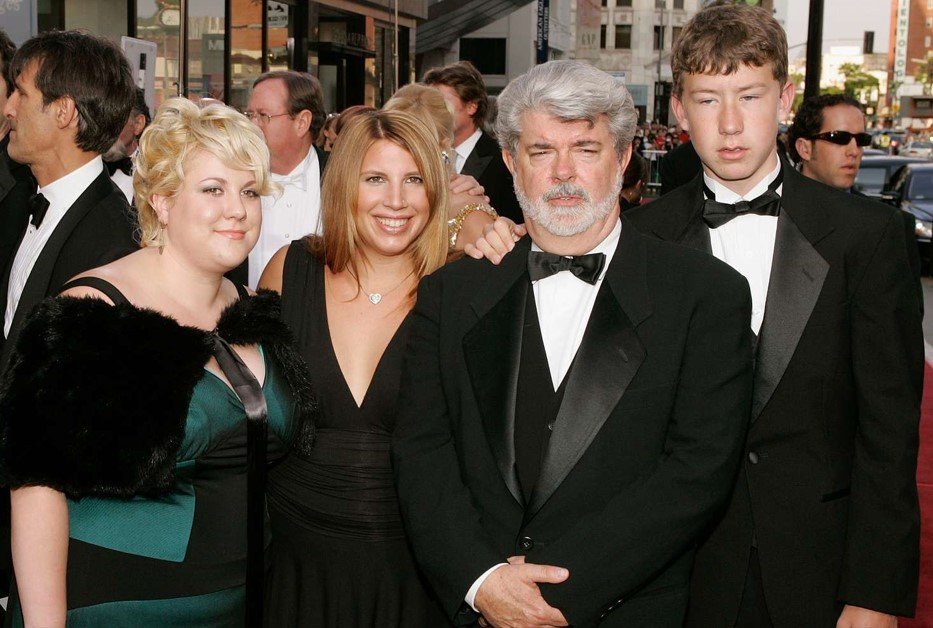
George Lucas married film editor Marcia Lucas (née Griffin) in 1969; the couple worked together on several early Lucasfilm productions before divorcing in 1983. Lucas later became a single parent to three adopted children. In June 2013, Lucas married Mellody Hobson, a prominent American businesswoman and co-CEO of Ariel Investments. The couple has one daughter together, born via surrogate in 2013. Lucas has largely stepped back from public-facing filmmaking since the Disney sale and now divides his focus between family life, museum development, and philanthropic work.
Philanthropy
Philanthropy has become a defining focus of Lucas’s post-Lucasfilm career. He founded the George Lucas Educational Foundation, known for its Edutopia platform, which promotes innovative approaches to K-12 education. Lucas has publicly stated his intention to direct the large majority of his wealth toward charitable causes, particularly education, and is a signatory of the Giving Pledge, through which billionaires commit to donating the majority of their fortunes during their lifetimes or in their wills. His most visible current philanthropic project is the Lucas Museum of Narrative Art, funded personally by Lucas and Mellody Hobson, which is set to open in Los Angeles in September 2026 and will house a large collection of narrative and illustrative art, much of it drawn from Lucas’s personal holdings.
Lesser-Known Facts
- Lucas’s early student film, Electronic Labyrinth: THX 1138 4EB, later became the basis for his first full-length feature.
- He was seriously injured in a car crash as a teenager, an event he has cited as reshaping the direction of his life away from racing.
- Lucas largely self-financed the Star Wars prequel trilogy, which allowed him to retain a greater share of the profits than a traditional studio deal would have permitted.
- The Lucas Museum of Narrative Art was originally proposed for sites in San Francisco and then Chicago before ultimately being built in Los Angeles’s Exposition Park, following years of site negotiations.
- Industrial Light & Magic, the visual effects house Lucas founded, has gone on to work on countless films entirely unrelated to Star Wars or Lucasfilm.
Learn More: Ryan Gosling Net Worth
Frequently Asked Questions
1. What is George Lucas’s net worth in 2026?
Public estimates vary by source, ranging from roughly $5.1 billion to $9 billion in 2026 reporting. There is no single confirmed figure, so these should be treated as approximations.
2. How did George Lucas become a billionaire?
Primarily through creating and owning the Star Wars franchise, retaining licensing and merchandising rights, and the 2012 sale of Lucasfilm to Disney for a reported $4.05 billion.
3. How much did Disney pay for Lucasfilm?
Disney’s 2012 acquisition of Lucasfilm was reported at approximately $4.05 billion, paid in a combination of cash and Disney stock.
4. Does George Lucas still own any part of Star Wars?
No. As part of the 2012 sale, Lucas transferred ownership of Lucasfilm, including the Star Wars intellectual property, to Disney.
5. What companies did George Lucas found?
He founded Lucasfilm Ltd., Industrial Light & Magic, Skywalker Sound, and LucasArts, among other divisions built around Lucasfilm.
6. Is George Lucas still making movies?
Lucas has not directed a feature film since Star Wars: Episode III – Revenge of the Sith (2005) and has largely stepped back from active filmmaking since selling Lucasfilm in 2012.
7. What is George Lucas doing now?
He is primarily focused on philanthropy and the Lucas Museum of Narrative Art, which is scheduled to open in Los Angeles in September 2026.
8. Who is George Lucas married to?
He has been married to businesswoman Mellody Hobson since June 2013. He was previously married to film editor Marcia Lucas from 1969 to 1983.
9. Does George Lucas have children?
Yes, he has four children, including one daughter born via surrogate with Mellody Hobson and three children he adopted as a single parent following his first divorce.
10. Where does George Lucas live?
Public reporting, including Forbes, lists his residence as San Anselmo, California, near the Skywalker Ranch property he developed.
11. Has George Lucas won an Academy Award?
He has received an honorary Academy Award (the Irving G. Thalberg Memorial Award) but has not won a competitive Oscar, despite four nominations.
12. What is the Lucas Museum of Narrative Art?
It is a museum founded and funded by George Lucas and Mellody Hobson, dedicated to narrative and illustrative art, opening to the public in Los Angeles on September 22, 2026.
13. Is George Lucas active on social media?
No, he does not maintain a widely recognized personal social media presence; announcements related to his projects are typically made through official institutional channels.
14. How does George Lucas’s net worth compare to other directors?
Financial publications have frequently ranked Lucas among the wealthiest directors and producers in entertainment, often alongside Steven Spielberg, largely due to the scale of the Disney-Lucasfilm transaction.
15. Is George Lucas part of the Giving Pledge?
Yes, he has publicly committed to donating the majority of his wealth to charitable causes, particularly education, as part of the Giving Pledge.
Conclusion
George Lucas’s story is as much about business innovation as it is about creative achievement. From a modest upbringing in Modesto to building one of the most influential entertainment properties in history, Lucas reshaped how filmmakers approach ownership, licensing, and visual effects. While exact figures around George Lucas net worth differ from outlet to outlet — reflecting the inherent difficulty of valuing a fortune built on stock, real estate, and philanthropic commitments — what remains consistent across public reporting is the scale of his impact, both financially and culturally, and his current focus on directing much of that fortune toward education and the arts through initiatives like the Lucas Museum of Narrative Art.